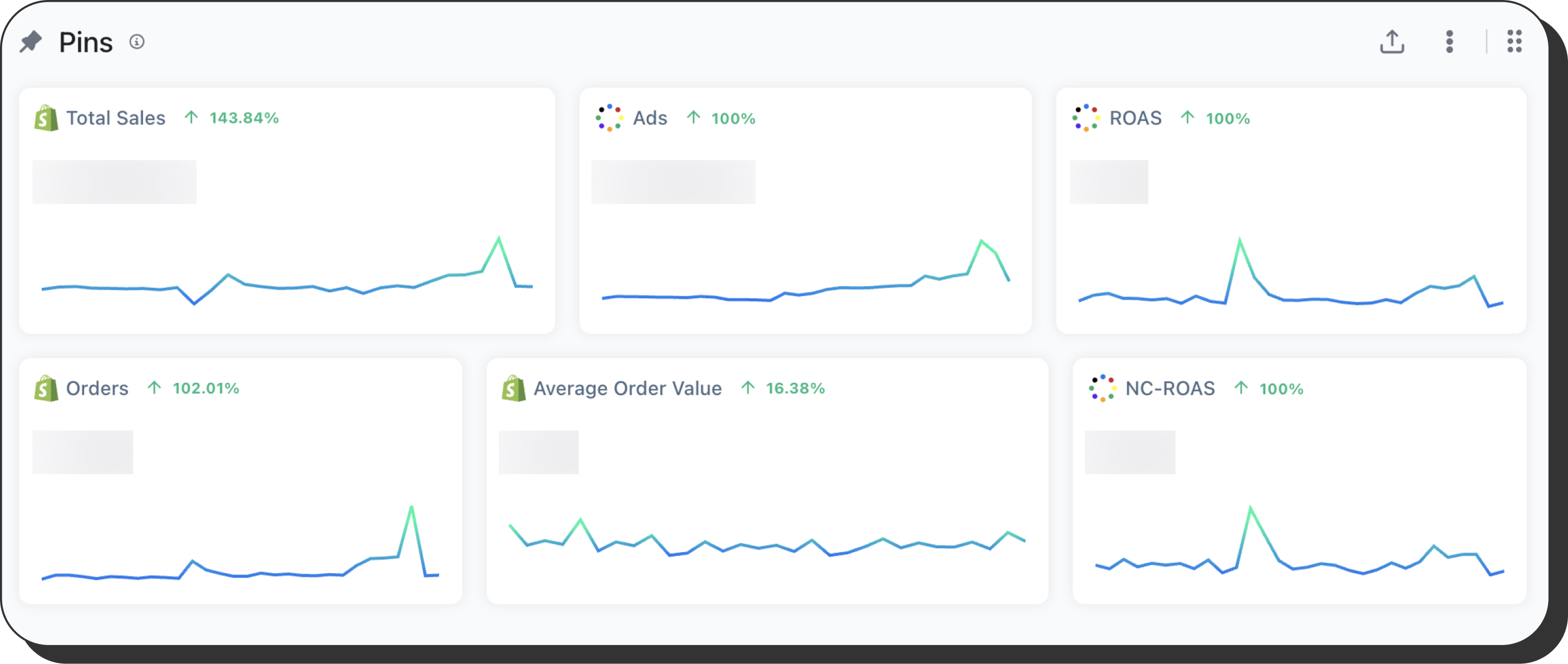
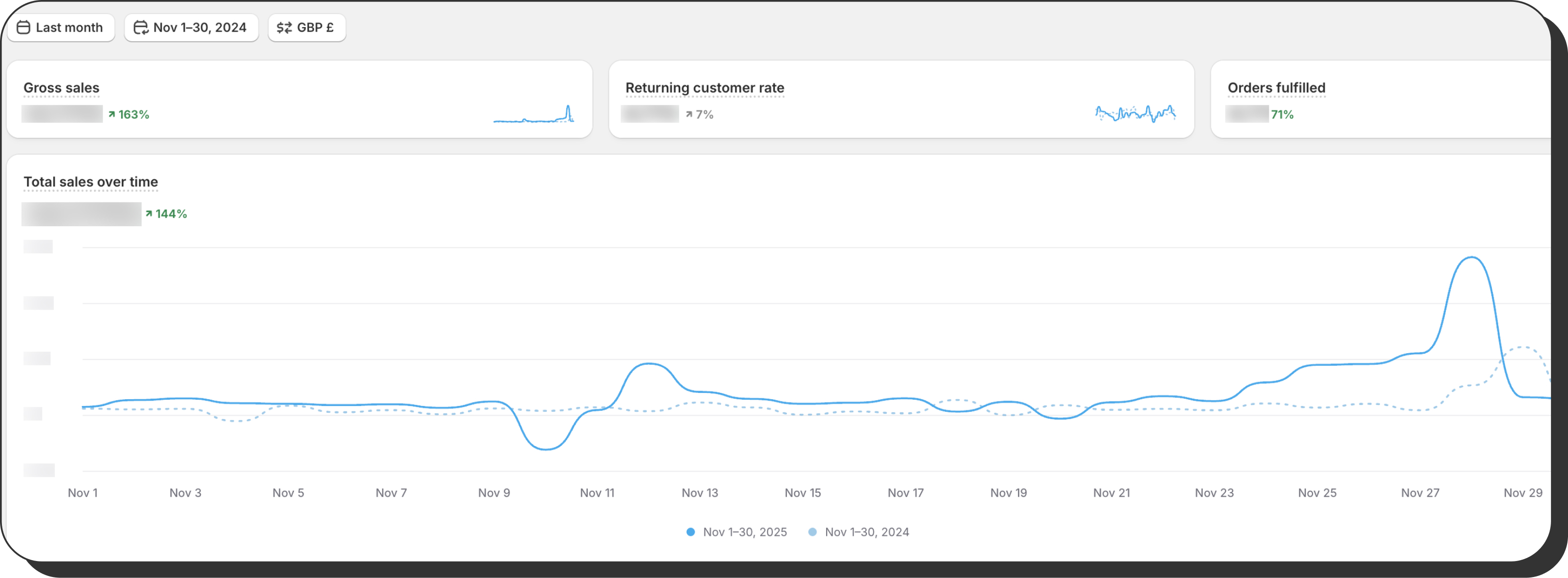
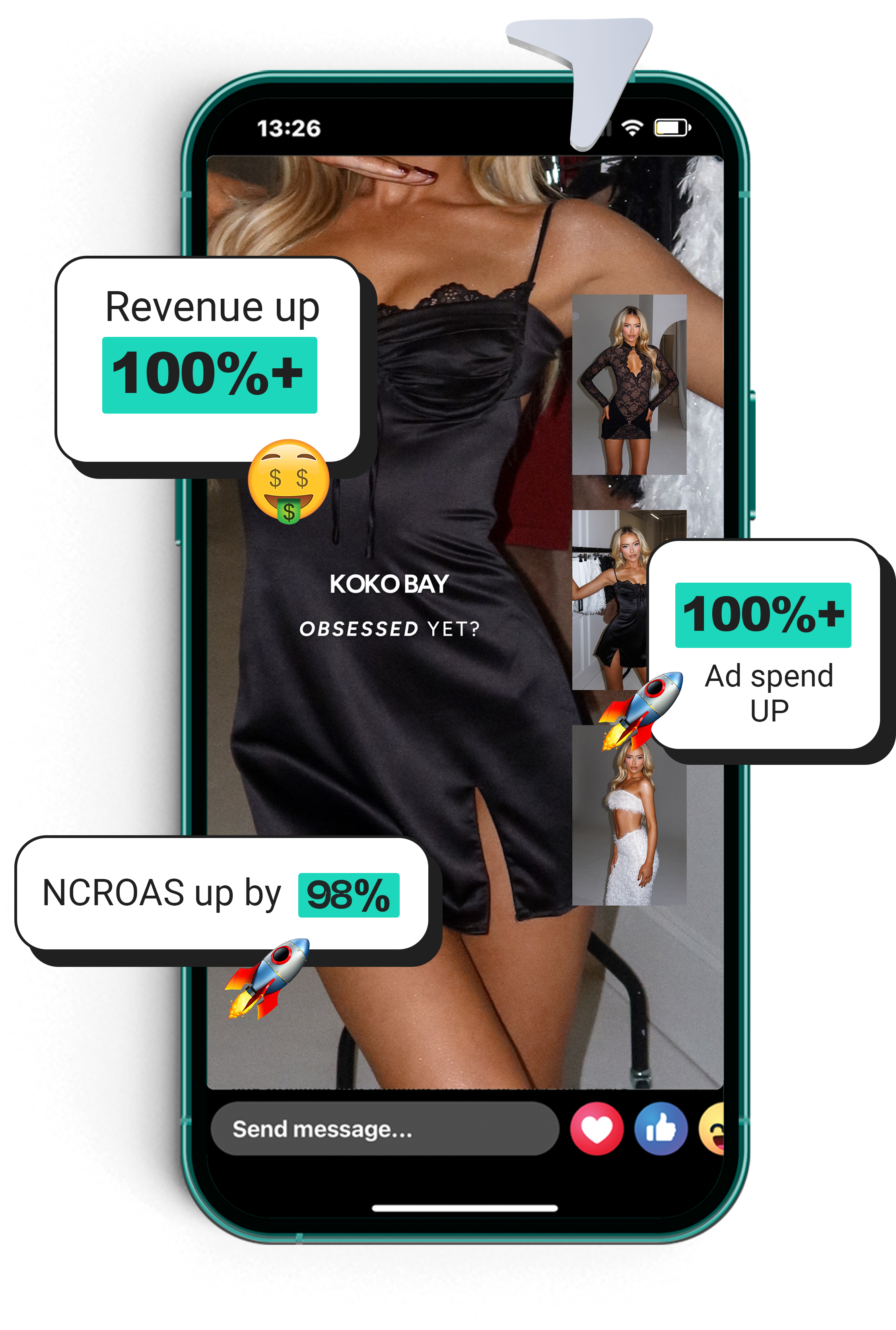
- Revenue up 100+%
- Ad spend up 100%
- NCROAS up by 98%
- Store sessions up by 54%

Background
Kokobay is a modern swimwear and beachwear brand known for its flattering fits, premium fabrics, and elevated, resort-inspired aesthetic. Built around confidence, comfort, and contemporary design, the brand has quickly earned a loyal customer base who turn to Kokobay for pieces that feel as good as they look - from timeless silhouettes to bold, trend-led styles designed for every getaway.
Kokobay partnered with us in August 2025 after running their own ads internally since launch, relying heavily on inefficient campaign types such as boosted posts and traffic objectives. Despite having a strong product and clear demand, performance had plateaued, acquisition costs were inconsistent, and the account lacked the structure and creative diversity needed to scale effectively. From the outset, our goal was to introduce a more strategic, performance-driven approach - rebuilding the account, modernising creative, and implementing a scalable acquisition system tailored for a brand ready to grow.
When we audited Kokobay’s account, it was clear the brand had strong demand and a loyal customer base - but the ad structure wasn’t built for scalable performance. Most spend was going toward boosted posts and traffic campaigns, which were driving clicks but not meaningful revenue. There was limited testing, no structured prospecting strategy, and no Google activity at all, meaning customers actively searching for the brand were not being captured. Creative was also underutilised, with very little variety circulating through the account and no system for learning what actually drove conversion.
Our priority was to rebuild the foundation from scratch. We consolidated the existing campaigns, introduced a clean performance structure centred around conversion objectives, and implemented both Meta and Google campaigns to ensure full-funnel coverage. We shifted budget away from low-intent traffic and toward high-intent acquisition, giving Kokobay the ability to scale sustainably rather than relying on vanity metrics. In parallel, we developed a modern creative strategy that emphasised product fit, lifestyle storytelling, and visual differentiation - increasing creative output and establishing a consistent testing roadmap.
By implementing this creative-led, data-driven approach, we unlocked new customer reach, improved conversion efficiency, and positioned Kokobay for the level of performance and scale the brand had been missing while managing ads internally.

Our first move was to merchandise the ad account around Kokobay’s strongest products. Rather than spreading spend across the entire catalogue, we structured campaigns to prioritise best-selling SKUs and high-performing collections - ensuring the pieces customers already loved were given the visibility and budget they deserved. This approach allowed us to drive efficient scale early while protecting spend from being diluted across items with weaker demand.
To support this, we introduced Dynamic Product Ads (DPAs) immediately. These campaigns gave us rapid product-level insights, allowing us to see exactly which SKUs were driving the strongest engagement, highest click-through rates, and the most consistent conversions. Within days, we had clear performance signals across the range - enabling us to double down on emerging best sellers and pull budget away from slower-moving products.
This product-led approach didn’t just improve account efficiency - it became a key driver of our creative strategy. The SKU-level data from DPAs highlighted which colours, styles, fits, and imagery resonated most with customers, enabling us to tailor new creative toward what people were actually buying. The result was a feedback loop between performance and production: more, better data → smarter SKU prioritisation → more relevant creative → stronger results → more scale.
Revenue up 100+%
Ad spend up 100%
NCROAS up by 98%
What did we do?
Our first move was to merchandise the ad account around Kokobay’s strongest products. Rather than spreading spend across the entire catalogue, we structured campaigns to prioritise best-selling SKUs and high-performing collections - ensuring the pieces customers already loved were given the visibility and budget they deserved. This approach allowed us to drive efficient scale early while protecting spend from being diluted across items with weaker demand.
To support this, we introduced Dynamic Product Ads (DPAs) immediately. These campaigns gave us rapid product-level insights, allowing us to see exactly which SKUs were driving the strongest engagement, highest click-through rates, and the most consistent conversions. Within days, we had clear performance signals across the range - enabling us to double down on emerging best sellers and pull budget away from slower-moving products.
This product-led approach didn’t just improve account efficiency - it became a key driver of our creative strategy. The SKU-level data from DPAs highlighted which colours, styles, fits, and imagery resonated most with customers, enabling us to tailor new creative toward what people were actually buying. The result was a feedback loop between performance and production: more, better data → smarter SKU prioritisation → more relevant creative → stronger results → more scale.
- Rebuilt the campaign structure around best-selling SKUs, giving us full control over budget allocation and ensuring the strongest products received consistent visibility and scale.
- Launched Dynamic Product Ads (DPAs) to gather immediate product-level insights, allowing us to identify emerging winners quickly and refine our SKU prioritisation based on real customer demand.
- Introduced a structured creative roadmap, using DPA data to inform which styles, colours, fits, and angles should be prioritised in new creative assets.
- Shifted all campaigns to conversion-focused objectives, eliminating boosted posts and traffic campaigns that were generating clicks but not revenue.
- Built a creative feedback loop, analysing hook rates, hold rates, CPCs, CPAs and product-level performance to refine concepts and ensure each new round of creative was grounded in data.
Adopted a simplified testing framework, running tests at the ad set level and copying winning post IDs into the scaling structure - ensuring only high-performing creative spent and reducing wasted budget.
Moved to click-only attribution, training the account to optimise for higher-intent actions and eliminating reliance on view-based attribution, which often inflates perceived performance without driving real results.
Hear from our partners

- Always be as consolidated as possible - Gone are the days of needing a new campaign weekly, creative strategy moves the needle. Less campaigns results in a cleaner, easier to manage approach meaning we can spend our time on what really matters.
- Going as broad as possible with targeting, as soon as possible - We should be aiming to go broad with targeting as soon as possible - Every sale you achieve on a broad audience makes the machine algo much smarter
- Don't force spend on ads, at any level of your ad account - You don't need to be forcing spend on creatives, if meta isn’t pushing spend to them, you already have your answer. Let the machine go to work and do its thing.
- Utilise Catalog ads correctly - We should always use catalog DPAs, but be aware of the role they play in your ad account and don’t try to scale them too hard - They push people over the line.
- Creative diversification is KEY - Creative is our targeting now - This is how we tap into different pockets of our audience, by utilising new creative formats.